
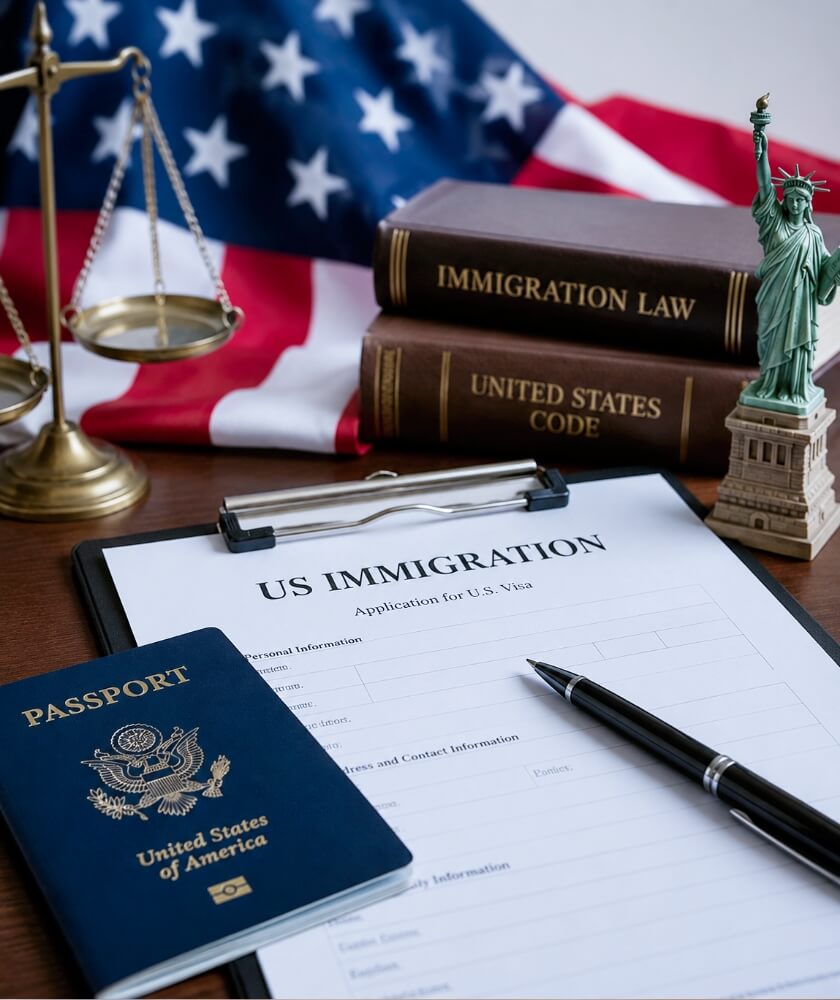
US Immigration
United States immigration law acts as the nation's regulatory gatekeeper, establishing the rules for who can cross its borders, how long they can stay, and the paths available to earn citizenship. Structurally, it is rooted in federal legislation—primarily the Immigration and Nationality Act (INA)—meaning it applies uniformly across all fifty states.
Because it deals directly with international movement, national security, and domestic labor, this practice area is uniquely complex. It is heavily governed by administrative law and falls under the jurisdiction of several federal agencies within the Department of Homeland Security (DHS) and the Department of Justice (DOJ), including:
-
U.S. Citizenship and Immigration Services (USCIS): Handles administrative benefits, green cards, and naturalization.
-
Immigration and Customs Enforcement (ICE): Manages internal enforcement and deportation processing.
-
Customs and Border Protection (CBP): Directs border security and inspections at ports of entry.
-
Executive Office for Immigration Review (EOIR): Oversees the specialized administrative immigration court system.
SCOPE OF SERVICES
Employment-Based Visas & Sponsorship
Assisting businesses in securing temporary work visas (such as H-1B, L-1, or O-1) or permanent residency (PERM labor certification) for international executives, tech professionals, scientists, artists, and athletes.
Family Reunification
Helping citizens and lawful permanent residents sponsor family members through marriage-based green cards, fiancé visas (K-1), or relative petitions.
Humanitarian Protections
Preparing complex applications for individuals seeking refuge from persecution, including asylum claims, refugee status, and temporary protected status (TPS).
Deportation & Removal Defense
Representing noncitizens facing expulsion from the country before immigration judges, which involves filing motions, seeking waivers of inadmissibility, or requesting bond hearings.
Naturalization & Citizenship
Guiding legal residents through the ultimate steps of becoming a U.S. citizen, navigating background checks, and resolving eligibility bottlenecks.
Corporate Auditing & Policy Support
Reviewing employer workplace documentation (like Form I-9 and E-Verify compliance) and conducting proactive internal audits to protect companies from steep civil penalties.
TYPES OF CLIENTS SERVED
Corporate & Institutional Clients
This spans from large multinational conglomerates and fast-growing tech startups to universities and healthcare networks. These clients rely on legal counsel to move international talent seamlessly across borders and ensure their hiring practices remain completely legal under federal regulations.
Individuals & Families
These are everyday people navigating the personal side of the system. Clients include spouses of U.S. citizens, international students adjusting their status, and long-term residents applying for naturalization.
Vulnerable & Humanitarian Populations
This group includes individuals fleeing conflict or political persecution, unaccompanied minors, and victims of human trafficking or abuse who qualify for specialized protective visas.
COMMON LEGAL ISSUES HANDLED
Overstaying Visas & Unlawful Status
Advising individuals who have stayed past their authorized period or accidentally violated the terms of their visa (e.g., working without explicit permission).
inadmissibility Bars
Navigating legal barriers that prevent a person from entering the U.S., often due to past criminal histories, specific medical conditions, or allegations of fraud on prior applications.
Government Bureaucracy & Delays
Stepping in when applications face severe backlogs, which sometimes requires filing federal lawsuits (such as a Writ of Mandamus) to force an agency to make a decision.
Workplace Enforcement Actions
Defending businesses facing sudden federal audits or investigations into their workforce verification records.
APPROACH TO HANDLING MATTERS -- FUNCTIONAL OPERATIONAL MODES
Compliance & Advisory-Focused
This dominates the corporate sector. Attorneys spend significant time offering preventative advice to companies regarding shifting federal guidelines, workplace compliance, and the structural impact of corporate mergers or layoffs on visa-holding employees.
Highly Transactional
A massive portion of immigration law is administrative. It requires meticulously gathering personal histories, tracking strict government quotas, and ensuring high-stakes paperwork is flawless to avoid delays or instant denials.
Litigation Strategy
When a case goes to immigration court or involves appealing a denied petition, the practice transforms into trial advocacy. Lawyers build evidentiary records, draft legal briefs, and argue directly before judges.
APPROACH TO HANDLING MATTERS -- CASE MANAGEMENT IN PRACTICE
Digital Client Portals
To securely collect sensitive foreign documents, passports, and personal data from clients worldwide.
Automated Form Syncing
To populate intricate government forms dynamically, minimizing manual typos that could trigger a Request for Evidence (RFE).
Systematic Background Research
Defaulting to Freedom of Information Act (FOIA) requests and independent background checks early in the client onboarding process to uncover hidden historical issues—such as undocumented past entries or old minor offenses—before they blindside the strategy.
